
Our Lady of the Rosary Primary School
Online Safety
Online Safety at OLOR
Staying safe, being kind and making positive choices online
At Our Lady of the Rosary, we want every child to feel safe, happy and respected – both in school and online. Technology offers children many exciting opportunities to learn, communicate and have fun, but it is important that they understand how to use it safely and responsibly.
Online safety is an important part of our safeguarding work. We teach children how to recognise potential risks, protect their personal information, make sensible choices and seek help if something makes them feel uncomfortable or worried.
Our school values of Kindness, Respect, Inclusion, Resilience and Excellence apply just as much online as they do in the classroom and playground.
OLOR'S Online Safety Rules
At OLOR, we encourage every child to make safe, kind and responsible choices online. Our five online safety rules help children understand how to treat others and protect themselves whenever they are using the internet.
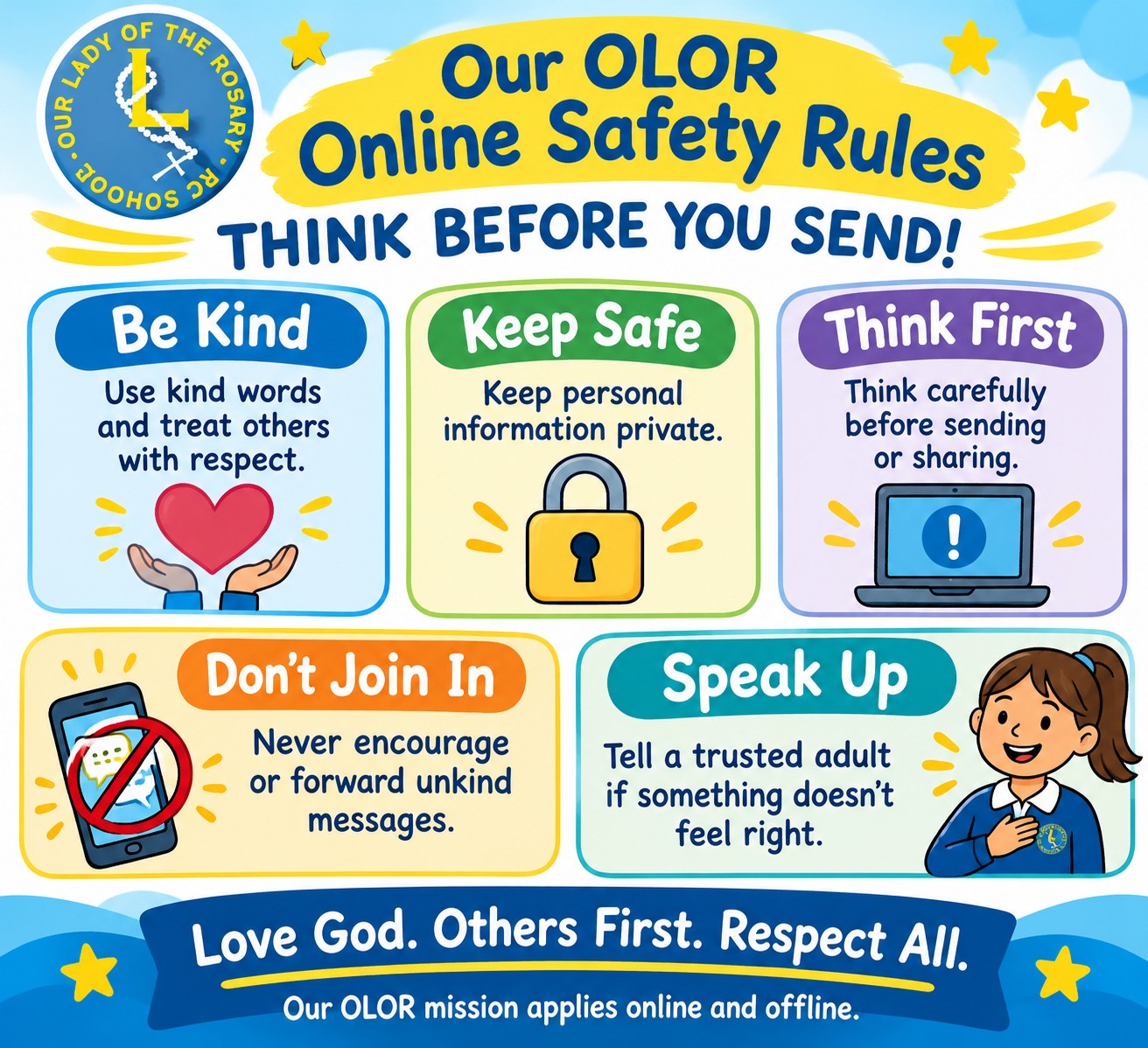
Kindness and Respect Online
We are increasingly aware of the challenges children can face through mobile phones, messaging apps, online games and group chats. Messages and comments can be hurtful, upsetting and difficult to forget. Sometimes children may send or share things without thinking about the impact they could have on someone else.
At OLOR, we expect all children to:
-
Think carefully before sending a message, comment, photograph or video.
-
Speak to others online with kindness and respect.
-
Never send, post or share messages intended to upset, embarrass or hurt someone.
-
Never join in with, encourage or forward unkind messages about another person.
-
Respect other people's privacy and never share photographs or personal information without permission.
-
Tell a trusted adult if they see something unkind, worrying or inappropriate online.
Mobile Phones, Messaging and Group Chats
Mobile phones and messaging groups can create particular challenges for children and families. Group chats can sometimes lead to misunderstandings, arguments, exclusion and unkind comments. Messages can be quickly shared, screenshotted and passed on, making it difficult to undo the harm caused.
We encourage parents and carers to take an active interest in their child's use of mobile phones and messaging apps. Please consider:
-
Knowing which apps and messaging platforms your child uses.
-
Checking who your child is communicating with and whether group chats are appropriate.
-
Talking regularly about the messages they send and receive.
-
Reminding children that they should never feel pressured to join in with unkind conversations.
-
Setting clear expectations about when and where phones can be used.
-
Encouraging children to speak to you if a message makes them feel worried, upset or uncomfortable.
If your child receives an unkind or inappropriate message, encourage them not to reply or retaliate. Keep the message as evidence, where appropriate, and seek support from a trusted adult.
What Should My Child Do if Something Goes Wrong Online?
We want every child to know that they can ask for help. They should never feel that they are in trouble for telling an adult about something that has happened online.
Remind your child to:
-
Stop – don't reply to an unkind or upsetting message.
-
Save – keep evidence of what has happened, if it is safe and appropriate to do so.
-
Block and report – use the safety tools available on the app or platform.
-
Tell – speak to a parent, carer, teacher or another trusted adult.
If you have concerns about online behaviour involving children in our school community, please contact your child's class teacher or our Designated Safeguarding Lead so that we can work together to establish what has happened and consider the appropriate support.
How Parents and Carers Can Help
Parents and carers play a vital role in helping children develop safe and responsible online habits. Regular, open conversations are often the best starting point.
You can help by:
-
Taking an interest in what your child enjoys doing online.
-
Keeping devices in shared family spaces where possible.
-
Checking privacy settings and age suitability of apps and games.
-
Agreeing clear family rules about screen time, phone use and messaging.
-
Talking about online friendships, peer pressure and the importance of treating others respectfully.
-
Reassuring your child that they can always come to you if something goes wrong.
It is important that children understand that the same rules of kindness, respect and good behaviour apply online as they do face to face.
Learning About Online Safety at OLOR
Online safety is taught throughout the year and forms part of our wider safeguarding and personal development curriculum. Through age-appropriate lessons, discussions and activities, children learn about:
-
Keeping personal information safe.
-
Recognising safe and unsafe online behaviour.
-
Cyberbullying and the impact of unkind messages.
-
Respectful communication and positive online friendships.
-
Social media, messaging apps and group chats.
-
Online gaming and speaking to people they do not know.
-
Digital footprints and the permanence of what we share.
-
Artificial intelligence, misinformation and making responsible choices online.
-
Knowing how and where to report concerns.
We also take part in Safer Internet Day, using the annual theme to encourage children to think about how they can make the internet a safer and more positive place.
Useful Online Safety Resources for Families
The following organisations provide helpful advice, activities and guidance for parents and carers.
-
UK Safer Internet Centre – advice and resources to help families support children online.
https://saferinternet.org.uk/ -
Childnet – practical guidance for parents and carers about online safety, social media and digital wellbeing.
https://www.childnet.com/parents-and-carers/ -
NSPCC – advice on keeping children safe online, including gaming, social media and talking to children about online risks.
https://www.nspcc.org.uk/keeping-children-safe/online-safety/ -
CEOP Safety Centre – report concerns about online sexual abuse or inappropriate contact with a child.
https://www.ceop.police.uk/Safety-Centre/